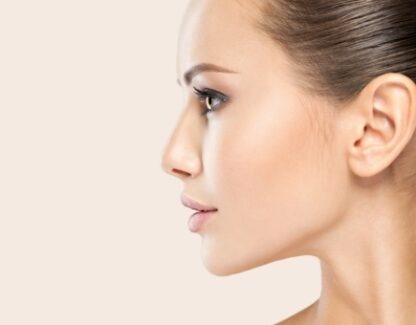
Nose Plastic Surgery
Dreaming of a perfect nose? It’s time to make your dreams come true! With rhinoplasty surgery you will emphasize your individuality, gain confidence, get rid of snoring, and your breathing will become easy and free.

Rhinoplasty is the correction of acquired or congenital deficiencies, defects of the nose, in order to improve its aesthetic appearance or functional state. This intervention is one of the most popular among both men and women. And at the same time, it is one of the most serious surgical procedures. Rhinoplasty is a separate area in plastic surgery. Many people are not satisfied with their appearance, and they are ready to do anything to like themselves. Often, they are not satisfied with the nose. There are also cases when you like the nose, but the septum is crooked, which causes difficulty breathing and snoring. In all these cases, the patient is shown treatment by a plastic surgeon, since clinical studies have proven that rhinoplasty improves the quality of life. The combination of shape correction (rhinoplasty) and breathing restoration ( septoplasty ) is called “rhinoseptoplasty”. This is the most popular operation at the ANACOSMA clinic.
Depending on which method of nose correction is chosen, there are 3 types of rhinoplasty:
The open method of rhinoplasty involves massive tissue trauma. The incision is made in the narrowest part of the bridge between the nostrils (columella). Then the skin is separated from the nose, and the surgeon performs all the necessary manipulations. Cosmetic sutures are applied to the skin.
The closed method of rhinoplasty is less traumatic. The incision is made only inside the nasal cavity. The suture is inside the nose, and there are no cuts or scars on the skin. For greater accuracy, an endoscopic device with a video system is often used in closed rhinoplasty.
Non-surgical rhinoplasty is an injection procedure for correcting the shape and contours of the nose using fillers (hyaluronic acid, Radiesse) and lipofilling (subcutaneous injection of the patient’s own fat). This procedure does not require rehabilitation, unlike surgery, after which the patient immediately goes home.
After performing closed and open rhinoplasty at the ANACOSMA clinic, patients have an external splint made of thermoplates (instead of a plaster cast) applied to the nose for a certain period of time, and nasal splints (instead of tampons) are placed in the nose. Also, after removing the thermoplate, tapes are applied, they are used to relieve swelling, since it has been clinically proven that this accelerates the rehabilitation process and has a positive effect on the result. These modern technologies more effectively fix and support the nose in the postoperative period, and therefore facilitate rehabilitation and healing.
Depending on the purpose of the operation, the following types of rhinoplasty are distinguished:
The surgical arsenal of the ANACOSMA clinic has the latest technical innovations for rhinoplasty. This is the Piezotom ultrasound device for correcting bone tissue irregularities (cutting, filing, leveling, reducing) without damaging other structures, and the Swiss micro saw system, an endoscopic visualization system for closed rhinoplasty.
There is also primary rhinoplasty, when this is the first operation, and secondary, when the patient has previously undergone aesthetic or reconstructive surgery in the area of the external nose. Secondary rhinoplasty is most often required in case of severe deformation of the nose, especially after injuries. With this type of rhinoplasty, it is sometimes necessary to take an autograft in the form of cartilage (from the auricle or rib), or temporal fascia – for better coverage of the nasal cartilage.
With the help of rhinoplasty, the patient can solve the following problems:
And this is not the entire list of indications. A plastic surgeon can help solve almost all problems with the nose to make the face more harmonious.
Due to the surgeon’s insufficient professional level, little experience, and also due to failure to perform all manipulations during rhinoplasty, the following postoperative pathology is possible:
With the help of rhinoplasty, the patient can solve the following problems:
And this is not the entire list of indications. A plastic surgeon can help solve almost all problems with the nose to make the face more harmonious.
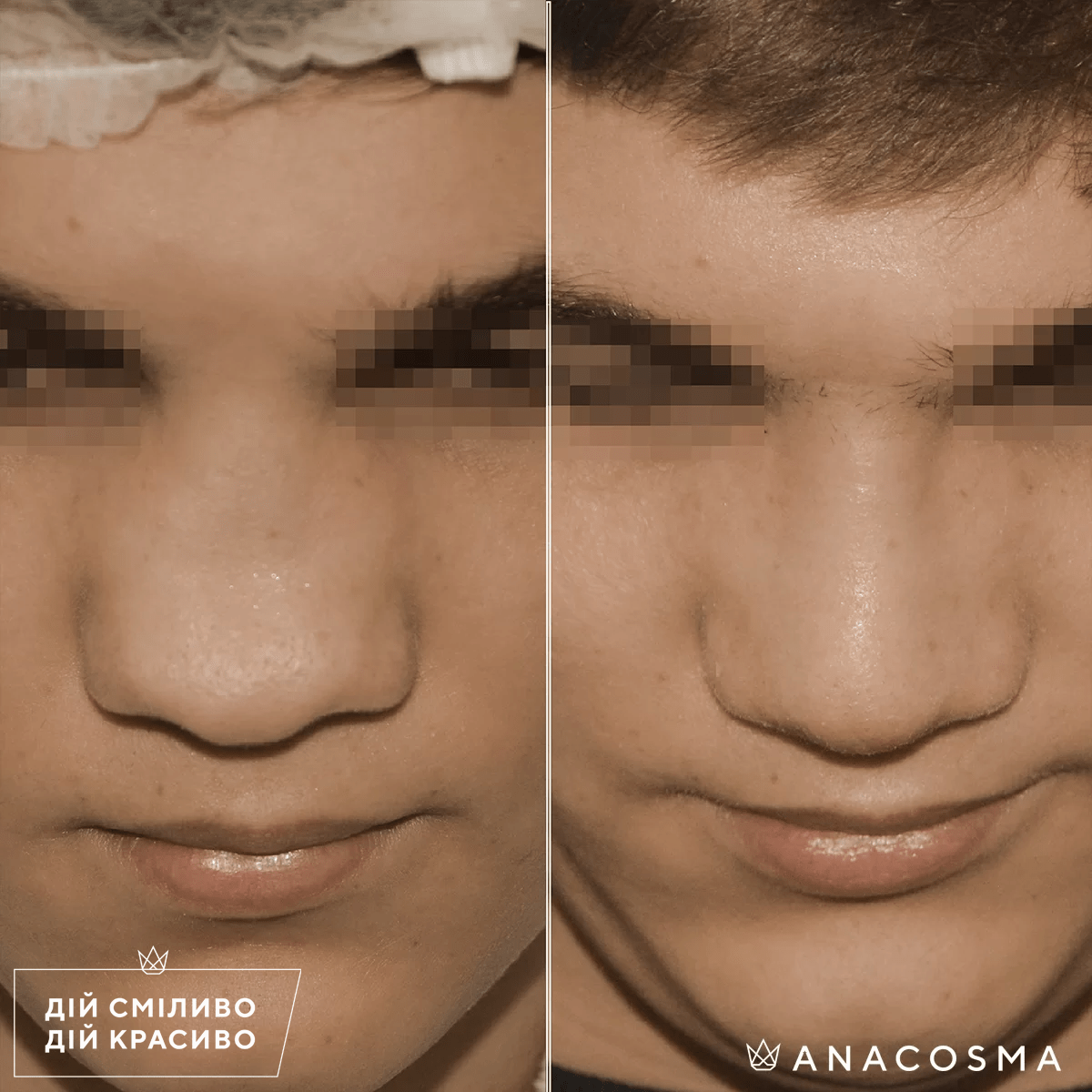
The removal of the splints from the thermoplate occurs on the 6-10th day after the operation. The patient can evaluate the first effect of rhinoplasty. The area of intervention is still slightly swollen, but it is already clearly visible that the structure of the nose is different. Then the patient wears the thermoplates around the clock for another 3-7 days and for two weeks only at night. The final effect is assessed after 2-3 months, and in some cases – up to 6-12 months (a shorter period is facilitated by the rehabilitation program, as well as the individual characteristics of each organism).
Please leave your review. Its very important for us
| № | Surgery | Price, UAH |
|---|---|---|
| 1 | Rhinoplasty (complexity 1) (by plastic surgeon, MD, PhD) | 189000 |
| 2 | Rhinoplasty (complexity 2) (by plastic surgeon, MD, PhD) | 260800 |
| 3 | Rhinoplasty (complexity 3) (by plastic surgeon, MD, PhD) | 338800 |
| 4 | Tip Rhinoplasty (by plastic surgeon, MD, PhD) | 260000 |
| 5 | Rhinoplasty (complexity 4) (by plastic surgeon, MD, PhD) repeated rhinoplasty, correction of post-traumatic nose | 440000 |
| 6 | Rhinoplasty (complexity 1) (by plastic surgeon, MD) | 75000 |
| 7 | Rhinoplasty (complexity 2) (by plastic surgeon, MD) | 117000 |
| 8 | Medical services (classic anesthesia, general practitioner consultation before and after surgery, hospital 2 days, thermoplastic for fixing the nose, silicone inserts for easier breathing after surgery, examinations and dressings for a month, a set of medications for postoperative care, doctor’s recommendations for restoration at home, etc.) | 64540 |